First Click, Final Signature: Tracing Fifty Instructions Back to Their True Starting Point
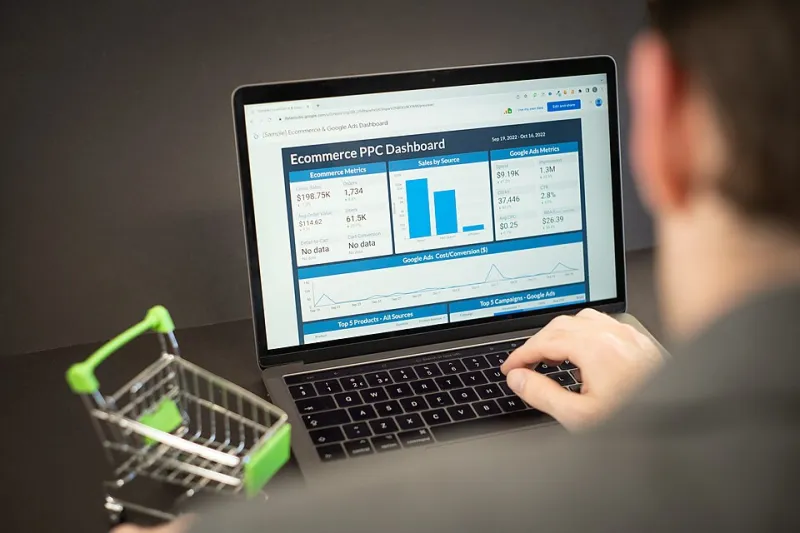
Photo: Zuko.io Images, CC BY 2.0, via Wikimedia Commons
Ask an agency owner where their last instruction came from and you will usually get a confident answer: 'They found us on Google.' Press a little further and the confidence wobbles. What they often mean is that the vendor's final action before calling was a Google search — not that Google started the relationship.
Over the past six months, we worked with a group of independent UK agencies to trace fifty instructions from signed contract backwards, logging every touchpoint we could verify. The findings are instructive for any agent still treating their analytics dashboard as a simple list of last clicks.
The Problem With Last-Click Thinking
Most agency analytics reviews follow the same pattern: a valuation gets booked, someone asks the vendor how they heard about the firm, and the answer gets written into the CRM. 'Google' is the default. So is 'Rightmove' or 'a recommendation'.
Our traced data told a messier story. Of the fifty instructions, only eleven could be genuinely attributed to a single touchpoint. The remaining thirty-nine involved two or more channels, with a median gap of twenty-three days between first contact and the valuation booking.
That gap matters. If a vendor first encounters your agency through a local Facebook group recommendation in early March, then reads a blog post about your town's catchment in late March, then searches your brand name and books a valuation in April — the last click tells you almost nothing about why they chose you.
What the Fifty Instructions Actually Showed
Mapping every touchpoint produced a clear hierarchy of starting channels, which looked remarkably different from the channels that received credit:
- Organic search started 40% of journeys — usually non-brand queries such as 'how much is my house worth in [town]' or hyper-local area guides. Yet organic received explicit credit in fewer than a quarter of the CRM records.
- Word of mouth was real but incomplete — eighteen vendors mentioned a recommendation, but fourteen of those eighteen had also visited the website beforehand or afterwards. The recommendation opened the door; the website closed it.
- Google Business Profiles punched above their weight — profile views preceded eleven first contacts, particularly on mobile, despite almost none of these appearing in attribution reports.
- Portals were rarely the origin — Rightmove and Zoopla appeared in the journeys of buyers far more than vendors. Sellers browsed portals as consumers; they chose an agent through a different route entirely.
The pattern is consistent with what we have argued before: agencies systematically undervalue the quiet, early touchpoints because those touchpoints do not sit conveniently next to the instruction in a CRM.
A Framework Any Agency Can Run
You do not need enterprise software to do this properly. You need GA4, a spreadsheet, and discipline.
Step one: extend your 'how did you hear about us' question. At valuation booking, ask two things instead of one: 'Where did you first come across us?' and 'What made you contact us today?' The difference between the two answers is where your attribution blindness lives.
Step two: build a touchpoint log. Create a simple spreadsheet with one row per instruction. Columns: instruction date, first-touch channel (per the vendor), last-touch channel, days elapsed, and any verifiable digital trail — a GA4 landing page, a GBP call, a form submission.
Step three: cross-reference GA4's attribution paths. In GA4, the Advertising section's attribution paths report shows the channel sequence for converted sessions. It is not perfect — it cannot see a Facebook group comment or a chat over the garden fence — but it will reveal the multi-touch journeys your CRM ignores.
Step four: review quarterly. After one quarter, you will have a small but honest dataset. After a year, you will know which channels start journeys in your patch and which merely finish them.
Why This Changes Budget Decisions
Agencies that ran this exercise made predictable adjustments. Two redirected spend from portal showcase listings towards area-guide content, having discovered that organic search was the dominant first touch in their patch. One stopped panicking about quiet months on the valuation form, recognising that first touches were accumulating weeks ahead of bookings.
The broader lesson is about intellectual honesty. Last-click attribution flatters whichever channel happens to be closest to the signature — usually brand search, which is itself a product of everything that came before. Treat brand search as the harvest, not the field.
Fifty instructions is a modest sample, and we would be the first to caution against over-reading it. But the direction is consistent with every dataset we have examined in UK agency marketing: the vendor journey is longer, quieter and more multi-channel than the CRM suggests. The agencies that map it properly will spend next year's budget on the channels that actually open the conversation — not just the ones that happen to be standing there when the contract is signed.