Your Completed Transactions Are a Search Asset — So Why Are They Hiding?
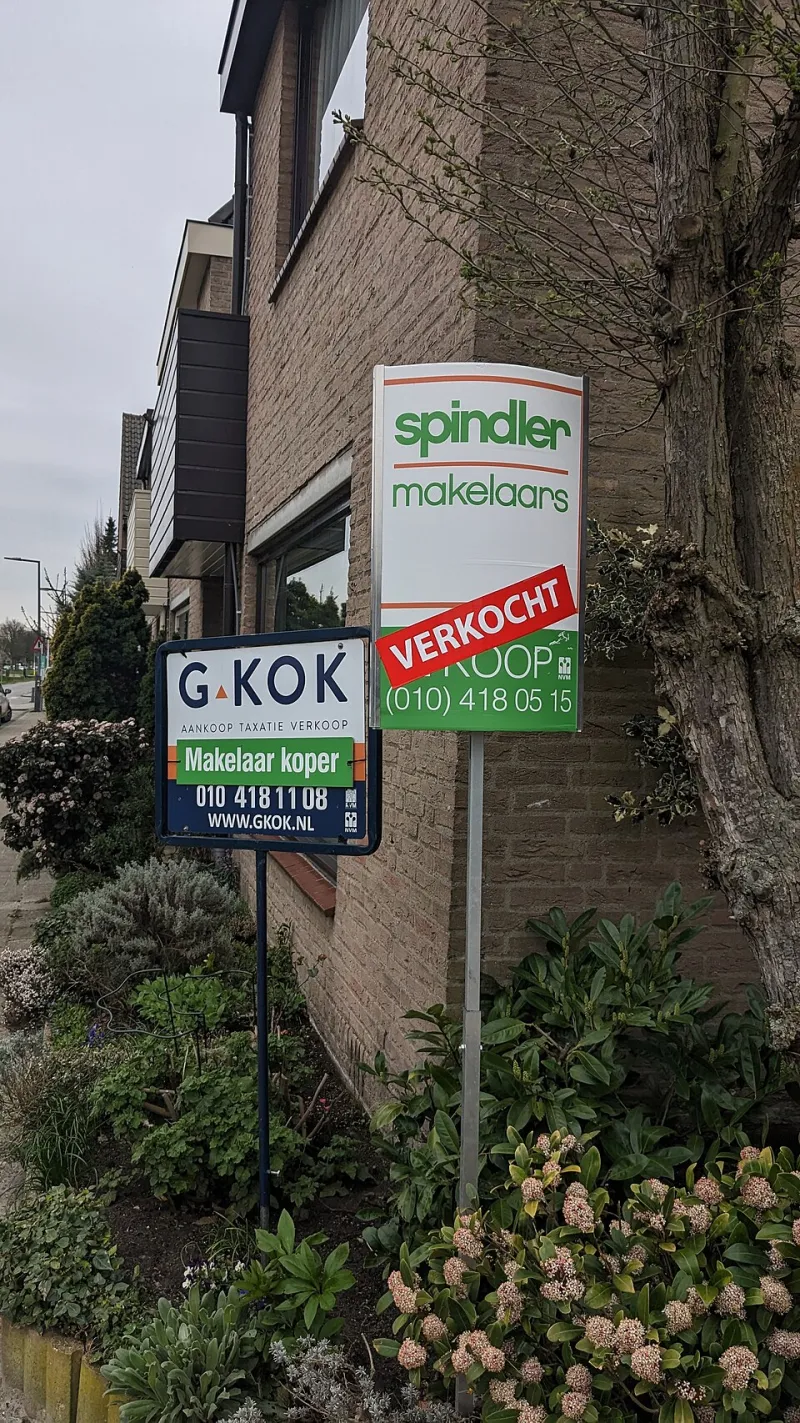
Photo: Donald Trung Quoc Don (Chữ Hán: 徵國單) - Wikimedia Commons - © CC BY-SA 4.0 International.(Want to use this image?)Original publication 📤: --Donald Trung 『徵國單』 (No Fake News 💬) (WikiProject Numismatics 💴) (Articles 📚) 16:28, 29 March 2023 (UTC), CC B
There is a peculiar asymmetry at the heart of UK estate agency marketing. An agent will spend thousands of pounds winning an instruction — the portal listing, the photography, the floorplan, the brochure — and then, the moment the sale completes, the entire digital trail evaporates. The listing comes down. The URL redirects nowhere useful. The only permanent record is a screenshot in a vendor's camera roll.
Contrast this with how the same agency treats its high street presence. Nobody takes down the sold board the day after completion; it stays up for weeks precisely because it signals competence to every passer-by. Online, the opposite happens. The evidence of success is deleted at the exact moment it becomes most valuable.
The Search Demand Already Exists
Look at the query data for any mid-sized UK town and you will find a consistent pattern: searches for "recently sold in [town]", "what did that house sell for", and "[street name] sold prices" appear in steady volume year-round. These are not idle enquiries. Someone researching what a neighbouring property fetched is almost always a prospective vendor calibrating their own expectations — the highest-intent audience an agency can reach.
Right now, that traffic flows almost exclusively to the portals and to Land Registry aggregators. Neither of them is trying to win the instruction. Both are happy to answer the question and send the visitor on their way, unconverted. An agency that publishes its own sold record — properly structured, genuinely useful, updated with every completion — inserts itself into a conversation it currently isn't part of.
Why the Sold Record Compounds
Most agency content decays. A market update written in March is stale by September. A sold-property hub behaves differently, because every completed transaction adds a new indexable page with its own long-tail relevance: the street, the property type, the achieved price, the time on market. A decade of transactions produces hundreds of pages, each one a potential entry point for a vendor searching a hyper-local phrase no national competitor will ever target.
There is also a trust dividend. A vendor comparing three agencies will rarely be swayed by identical claims of "proven results". They will be swayed by proof: a searchable record showing that the agency sold a terraced house two streets away, in eleven weeks, at 98% of asking price. That evidence is currently locked inside agencies' CRMs doing nothing.
A Practical Framework for the Sold-Property Hub
The build does not need to be elaborate, but it does need structure.
One page per completed transaction. Keep the original listing URL alive rather than deleting it — repurpose it as a sold record. Include the achieved price (or a realistic band where confidentiality matters), the marketing period, and a short narrative of how the sale was secured.
Structured data throughout. Marking up past listings so search engines understand the property type, location, and transaction status is the technical foundation. Without it, the hub is just another archive page; with it, the content becomes eligible for richer visibility and cleaner categorisation in search results.
Town and street-level hub pages. Individual sold records should roll up into pages for each village, postcode, or property type the agency covers. These aggregate pages are what rank for "recently sold in [town]" — the individual records supply the substance beneath them.
Case studies for the standouts. Not every sale deserves a write-up, but the difficult ones do: the probate property that needed sensitivity, the chain that nearly collapsed, the auction route that beat a private treaty. These pages do double duty, ranking for long-tail searches and giving vendors a reason to believe.
A cadence, not a project. The most common failure mode is the hub launched with enthusiasm and abandoned after three months. Publishing sold records should sit alongside the board going up as a standard part of the completion process — a checklist item, not a campaign.
The Objection, and Why It Fails
The usual pushback is confidentiality: vendors do not want their sale broadcast. This is solvable with a line in the instruction paperwork and a light touch in execution — price bands rather than exact figures where preferred, delays for sensitive cases, anonymisation where necessary. The portals publish sold prices as a matter of course via Land Registry data; an agency choosing to publish its own, with the vendor's blessing, is not exposing anything scandalous.
The second objection is effort. But compare the cost of repurposing a transaction you have already completed against the cost of acquiring the same visibility through paid channels, and the arithmetic is not close. This is the cheapest content an agency will ever produce, because the raw material already exists in the database.
Proof Is the Only Differentiator Left
As portal dependence deepens and agency websites converge on the same templates, the same stock photography and the same promises, the sold record is one of the few genuinely unreplicable assets an independent agency holds. It cannot be bought by a national competitor, and it grows more valuable with every completion.
The best results an agency achieves should not end their working life as a screenshot nobody takes. Turned into structured, searchable, accumulating pages, they become the quiet engine of vendor acquisition — evidence, published at scale, that the agency does exactly what it claims.